★★★
Budget
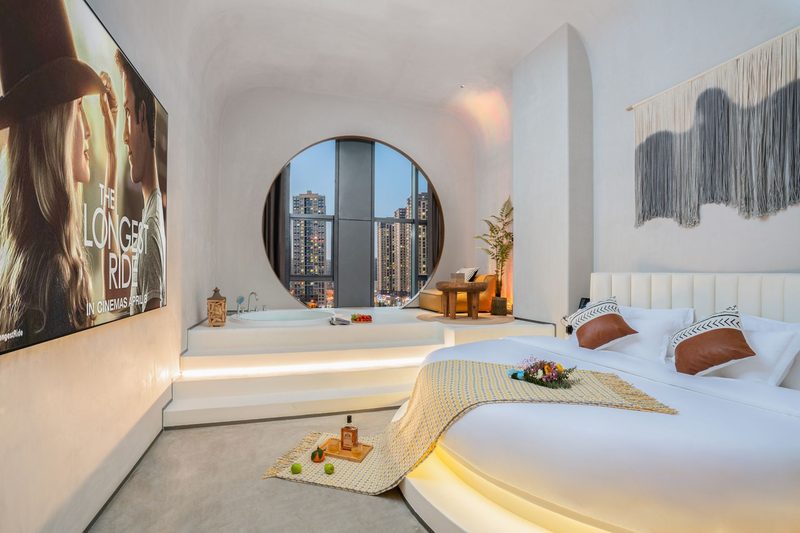
18 Degrees Smart Hotel(Kunming Vanke Charming City Guangwei Metro Station)
From $15 / night
Check Prices on Trip.com →
November weather, activities, events & insider tips
Temperature, rainfall and humidity at a glance
Weigh the advantages and considerations before booking
Top things to do during your visit
November is the sweet spot for Yuanyang, and every guesthouse owner knows it. The October harvest drains the paddies; Hani farmers then flood 16,000 hectares (62 sq mi) of hillside for winter, turning the slope into a stepped mirror that steals the sky. At Duoyishu viewpoint, 1,800 m (5,906 ft) above the Red River valley, mist rolls up at 5:30 am and vanishes by 9 am. In that 90-minute gap, low sun cuts through vapor, bounces off water in orange-silver bands, and fills the frames of photography workshops that time their Yunnan courses for November. Below the platforms, Qingkou and the hamlet of Duoyishu are working farms, not sets. Post-harvest, women weave indigo on backstrap looms while elders dry buckwheat on reed mats in courtyards. No performance. Budget two full days, three if you can, mist won't follow your schedule. Book licensed operators (see the booking section) who pair village homestays with sunrise runs; you'll understand the place in a way day-trip buses can't deliver.
22 km (13.7 miles) of upper gorge trail will eat your quads alive, 2,000 m (6,560 ft) up and down in two days. Yet November makes the pain feel smart. The north rim of the Jinsha River canyon stays dry, the dirt tacky underfoot, no summer flash-flood snarl from the river 2,000 m (6,560 ft) below. Slopes face north. The brush has rusted into gold and amber you'll never see in the green monotony of July. Mid-trail air sits at 15°C (59°F), cool enough to keep sweat in check, warm enough that you won't dig for a fleece every time you stop. Tea-house guesthouses, near the 12 km (7.5 mi) mark, are empty in November; you'll own the dining room at night, and the owners will talk instead of juggle a queue. Hit the 28 Bends, spin back toward Haba Snow Mountain at 5,396 m (17,703 ft): the view punches hard enough to justify every burning thigh. Skip the paved lower gorge road, same canyon, zero drama.
November gives you the best shot at seeing Meili Snow Mountain, the sacred Tibetan massif anchored by Kawagebo at 6,740 m (22,113 ft). That's it. No guarantees. From Deqin, the Feilai Temple viewpoint sits at 3,300 m (10,827 ft). You stare straight across a valley at the peak's full face. Clear mornings trigger the alpenglow Tibetan pilgrims call Kawagebo's blessing, the summit burns orange against dark sky a full 15 minutes before light reaches the valley. Cold air carries juniper incense from temple burners. The Lancang (Mekong) River valley holds Yubeng village, accessible only via 10 km (6.2 mi) trail or horse. November foot traffic stays thin enough the trail feels like a journey, not a managed experience. Watch the Deqin County approach road, snow can hit mid-November. Flexible scheduling matters more here than anywhere else in this itinerary.
100 km (62 mi) around Erhai Lake, Yunnan's second largest, sitting at 1,973 m (6,473 ft), threads straight through Bai minority fishing villages, past pagoda-studded shoreline, and into reed-marsh wetlands along the lake's northern edge. November turns dry and brisk. Cangshan Mountain behind Dali wears its first snow above 3,500 m (11,483 ft) while the lakeside stays at 15-20°C (59-68°F). Bai villages like Xizhou and Shuanglang keep working after harvest. Slip through the compounds at the back of the village and you'll find women processing buckwheat and making rubing, a firm white cheese grilled over charcoal until the outside chars and the inside softens, then eaten with coarse salt and chili paste. The two-day Erhai circuit normally includes an overnight at Shuanglang on the lake's east shore, the quieter, more atmospheric half. E-bikes handle the route's slight undulations without effort and are available throughout Dali.
Xishuangbanna feels like another planet. At just 552 m (1,811 ft), Jinghong hits 27-30°C (81-86°F) in November, ditch the fleece, grab repellent. The Menglun Tropical Botanical Garden, China's oldest research garden since 1959, spreads across 11.5 km² (4.4 sq mi) where the Luosuo and Lancang rivers meet. Jungle so thick you won't hear traffic. Hornbills glide overhead. The air smells of damp soil and something sweet-rotting, that's a working rainforest. Dai villages circle Jinghong, near Menghan and Ganlaba. Rent a bike. Follow the Lancang River flats. The road shrinks to a single lane between rubber trees. Motorbikes stacked with bananas are your only company. November brings decent odds for Asian elephants in Mengyang Nature Reserve. Dry season funnels animals to permanent water. Humidity hovers at 80%, not the 70% you might've read.
Songzanlin is the largest Tibetan Buddhist monastery in Yunnan, housing roughly 700 monks on a hillside 5 km (3.1 miles) north of Zhongdian town at 3,380 m (11,089 ft). Built in 1679 under the Fifth Dalai Lama's direction, it is a functioning monastic complex rather than a museum, morning chanting ceremonies begin at 6 am and the assembly hall's thangka collection includes pieces several centuries old. The surrounding Napahai wetland, 10 km (6.2 miles) from town, becomes the winter feeding ground for black-necked cranes migrating from the Tibetan Plateau, the colony of 100-200 birds is established by mid-November and feeds in the marsh grass through the morning hours. Combining the monastery at dawn with the crane wetland in the morning makes a full day. Dress for -8°C (18°F) overnight; the monks are in the same robes they wear in July, and they seem fine, which is either inspiring or slightly embarrassing depending on how many layers you're wearing.
Hand-picked hotels across price tiers for November travellers.
Bookmark this page — your progress is saved between visits
Climate-specific gear, brand recommendations, and what to leave at home.
View Yunnan Packing List →Insider knowledge and common pitfalls to avoid
Now that you've got the research covered, here's where to go next.
Top-rated things to do in Yunnan this November
Browse Viator's full catalog of tours, day trips, food experiences, and private guides in Yunnan.
See All Yunnan Tours on Viator